

Dr. Scherer is an Assistant Professor in the Division of Infectious Diseases in the Department of Medicine at Emory University School of Medicine. She is also Director of the Hope Clinic Vaccine and Treatment Evaluation Unit (VTEU) Research Laboratory and a full member of both the Microbiology and Molecular Genetics and Immunology and Molecular Pathogenesis graduate programs in the Laney Graduate School. Dr. Scherer joined Emory on March 1, 2020.
Dr. Scherer received a bachelor of science degree summa cum laude in Chemistry from the University of Arkansas. Dr. Scherer pursued graduate studies at The Scripps Research Institute in La Jolla, California, where she was selected into a joint PhD/DPhil program with the University of Oxford in the UK. After focusing largely on mechanisms of HIV inhibition by broadly neutralizing anti-HIV antibodies for her graduate work, Dr. Scherer transitioned to cellular immunology research in HIV and HPV vaccinology for her postdoctoral studies in the Department of Immunology at the University of Washington and in the Human Biology Division at the Fred Hutchinson Cancer Center in Seattle. Following her postdocs, Dr. Scherer transitioned to lead an antibody discovery team in biotech for approximately two years at Seagen, the then largest oncology therapeutics biotech in the Seattle area. Realizing her passion for infectious disease vaccine research, Dr. Scherer returned to the field as a fellow in the Respiratory Disease Branch at the Centers for Disease Control and Prevention for two years before joining Emory as faculty.
CF-AIR will be hosting Charles Esther, MD, PhD, Professor, Pediatric Pulmonology at University of North Carolina, Chapel Hill, for a virtual visit and talk on "Mucus, Microbes, and Inflammation: the Vicious Vortex in CF Airways Disease." Participants can join in-person in Emory Children's Center room 302, or virtually via Zoom.
The Marcus Autism Center Spring Symposium (formerly the Autism Treatment Symposium) is a one-day symposium during which faculty, staff, and other community professionals will disseminate their latest treatment research.
Invited Speaker:
Vivian Ibanez, PhD, BCBA-D
University of Florida Health Center for Autism and Neurodevelopment, Pediatric Feeding Disorders
Topic: "The Importance of Secondary Analyses During Behavioral Feeding Treatment"
Click "RSVP" below to register.
Free BACB CEs available!
For questions, please contact Dr. Chelsea Fleck at Chelsea.Fleck@choa.org.
The 2025 International Symposium on Medical Robotics (ISMR) will be held on the campus of Georgia Tech from May 14-16, 2025. The symposium will begin with the workshop(s)/tutorial(s) held on May 14 and the subsequent single-track symposium presentations will be at the Kendeda Building at Georgia Tech from May 15-16. This symposium will feature invited talk(s) and workshops in addition to single-track oral/poster presentations of original research.
As in the past, we also have the biennial school on medical robotics. In 2025, the Spring School on Medical Robotics (SSMR) will be from May 17-18, 2025, on the campus of Georgia Tech and will feature several invited speakers. 2025 ISMR and SSMR have been planned to be back-to-back with 2025 IEEE International Conference on Robotics and Automation (ICRA), which will be held in Atlanta, GA, USA from May 19-23, 2025.
The goal of ISMR is to bring together world-class researchers to present state-of-the-art research achievements and advances in surgical robotics, image-guided interventions, rehabilitation and assistive robotics, and prosthetics, as well as discuss challenges from the clinical point of view and address industry needs. It is envisioned that medical robots will integrate emerging technologies including soft robotics, smart materials, ergonomics, co-robotics, and artificial intelligence in the near future, and these topics will be featured in the symposium.
Potential topics for the symposium submissions include, but are not limited to, state-of-the-art research achievements and advances in surgical robotics, rehabilitation and assistive robotics, prosthetics, image-guided interventions, haptics, safety of robot-assisted procedures, training of medical personnel, and discussing potential challenges from the clinical point of view.
YHLS is where the future of healthcare leadership begins. Designed for ambitious young professionals, this summit connects you with career and financial workshops, investment groups, and mentors to help you build your power in both your career and community.
Why Attend?
🔹 Power: Gain insights and resources to take control of your professional and financial future.
🔹 Policy: In a post-election landscape, engage with experts on shaping the future of healthcare. Plus, don’t miss the ever-popular Kat and Stephen Show.
🔹 Potential: Discover how the next wave of wellness is reshaping healthcare and what it means for you.
A Global Experience
Attendees travel from all over the world (yes, even Switzerland!) to experience the unique energy of YHLS.
Casual Vibes, Serious Impact
The only place in healthcare where you’ll find casual clothes, comfortable conversations, and a relaxed atmosphere—without sacrificing the big ideas that shape the future.
Healthcare payment systems in the U.S. are complex, involving multiple stakeholders, dense billing structures, and administrative hurdles. For patients, this often leads to surprise bills, care delays, and a lack of cost transparency. Providers spend considerable time navigating reimbursement, while payers invest heavily in ensuring payment accuracy—diverting focus and resources from care delivery and creating strategic friction between payers and providers. These drive up costs, erode trust, and hinder outcomes. While initiatives like price transparency and value-based models aim to simplify the system, adoption remains inconsistent. This discussion will explore the impact of regulatory shifts, technology, and evolving payment models on patient care and experience.
Event Details:
Date: Tuesday, May 14th
Time: 5:00 PM – 7:00 PM
Format: 60 minute panel discussion
Location: Atlanta Technology Park
Audience: 60–80 participants including health tech executives, leaders from provider organizations and payer entities, and select inv
We are excited to invite you to the 14th Annual Southeastern Pediatric Research Conference, which will showcase the breadth of pediatric research conducted throughout the southeastern United States. This year's conference will feature groundbreaking research from Emory University, Children's Healthcare of Atlanta, Georgia Tech, and Morehouse School of Medicine and will bring together basic scientists, clinical researchers, pediatricians, and healthcare providers to advance the integration of innovative research into clinical practice.
The 2025 conference theme is "Healthy Minds, Brighter Futures: Advancing Pediatric Research and Innovation." It will highlight cutting-edge research across all areas of child health. Attendees can look forward to a dynamic day filled with insightful presentations, engaging poster sessions, valuable networking opportunities, and meaningful knowledge-sharing.
Important: If you register after Friday, May 23, 2025, a late registration fee will apply, and your name will not be included in the participant directory.
Nick Yaitsky is a seasoned technology leader with deep expertise in digital platforms and application engineering. As Vice President and Head of Digital Platforms at Wellstar Health System (since 2020), he drives digital innovation for patient and provider engagement, leading product development, engineering, automation, and data systems.
Previously, Nick served as Senior Vice President of Application Engineering at Sharecare, Inc., where he spearheaded data integration and content delivery systems. His earlier career includes roles as Senior Software Architect at KIT digital, Lead Developer at Multicast Media, and developer positions at MammalFish and Skillfusion Software.
Nick holds both a Bachelor of Science and a Master of Science in Computer Science from the Georgia Institute of Technology.
Bi-annual conference showcasing top science and fostering idea exchanges between leaders and newcomers to the biology/mass spectrometry interface. Reserve your spot today!
Jun 24, 2024
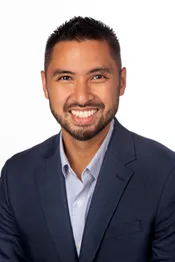
The Children's Healthcare of Atlanta Pediatric Technology Center at Georgia Tech (PTC) is excited to announce that Gian-Gabriel Garcia will serve as its Pillar 1 Co-Lead. Pillar 1 focuses on data science, machine learning, and artificial intelligence. In his new role, Garcia’s responsibilities will include setting the pillar’s strategy and vision, selecting and managing projects, overseeing various pillar activities, and working collaboratively across research groups and institutions. He will also identify cutting-edge technology and engineering solutions to implement priority projects, while balancing pragmatism and feasibility of these approaches.
The PTC brings clinical experts together with Georgia Tech scientists and engineers to develop technological solutions to problems in the health and care of children. The Center provides extraordinary opportunities for interdisciplinary collaboration in pediatrics, creating breakthrough discoveries that often can only be found at the intersection of multiple disciplines.
Garcia will work under the leadership of PTC Co-Directors Dr. Stanislav Emelianov (Georgia Tech) and Dr. Wilbur Lam (Children’s) of Georgia Tech’s Wallace H. Coulter Department of Biomedical Engineering at Georgia Tech and Emory University. Dr. Naveen Muthu of Children’s Physician Group will be Garcia’s counterpart in leading Pillar 1.
Since 2021, Garcia has served as an assistant professor in Georgia Tech’s H. Milton Stewart School of Industrial and Systems Engineering. His research group has published numerous journal & conference papers, and book chapters related to data-driven machine learning and optimization in healthcare, including various applications in diagnosis and disease management of concussion, opioids, cardiovascular disease, glaucoma, and maternal health. He has received federal funding as a primary investigator from both the National Institutes for Health and the Agency for Healthcare Research and Quality. He and his research group have received several national and international recognitions for their work.
Garcia also teaches graduate-level courses in machine learning and optimization for healthcare. He received his Ph.D. in industrial and operations engineering at the University of Michigan and was a postdoctoral fellow at the MGH Institute for Technology Assessment.