

Overview
Thank you for your commitment to pediatric research and interest in attending the Annual Southeastern Pediatric Research Conference.
We are excited to invite you to the 15th Annual Southeastern Pediatric Research Conference, which will showcase the breadth of pediatric research conducted throughout the southeastern United States. This year's conference will feature groundbreaking research from Emory University, Children's Healthcare of Atlanta, Georgia Tech, and Morehouse School of Medicine and will bring together basic scientists, clinical researchers, pediatricians, and healthcare providers to advance the integration of innovative research into clinical practice.
The 2026 conference theme is "Bench to Bedside and Beyond: Risk Factors and Intervention Strategies in Childhood Disease and Injury". It will highlight cutting-edge research across all areas of child health. Attendees can look forward to a dynamic day filled with insightful presentations, engaging poster sessions, valuable networking opportunities, and meaningful knowledge-sharing.
For more information and tickets, please visit the conference page here.
Mar 10, 2026
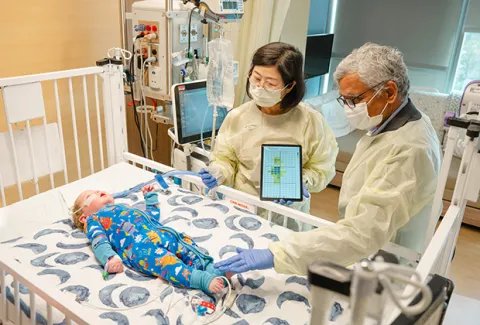
Hospital stays can be long and arduous; they can also cause serious complications. When a person lies in one position too long and begins to sweat, painful sores called pressure injuries (PIs) can form on the body, leading to infection or even death. A patient can develop a PI in a few days — or even a few hours. And once present, a PI is hard to treat.
Previously known as pressure ulcers, PIs affect 2.5 million patients and result in 60,000 deaths a year, from veterans in wheelchairs to premature babies requiring life-support devices in the Neonatal Intensive Care Unit. Even physicians wearing respirator masks for hours can be prone to PIs.
Another complication of PIs is that no one knows exactly how long it takes for them to form. Currently, the only way medical staff can prevent PIs is by manually turning bedridden or critically ill patients every few hours.
One missed turn can lead to more medical complications. The U.S. spends nearly $27 billion annually on PI medical care. Given the country’s ongoing nursing shortage, a more automated PI monitoring method needs to be implemented. This could ensure that patients leave the hospital better than when they arrived.
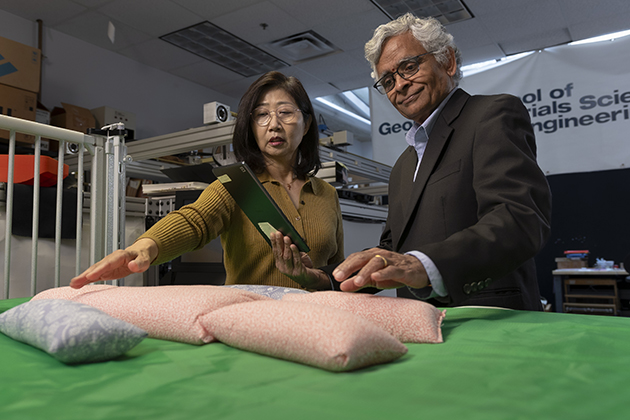
To address this issue, researchers at Georgia Tech have developed a new, flexible, sensor-filled fabric to monitor areas at risk of PIs and alert hospital staff when a patient needs to be turned.
“I call this technology a paradigm shift,” said Sundaresan Jayaraman, a professor in the School of Materials Science and Engineering (MSE). “We’re using a fabric that acts like a bedsheet under the patient. It collects pressure and moisture data unobtrusively — whether you're lying in bed or sitting in a wheelchair. From this, we can predict when a PI is likely to occur and, more importantly, understand how long it takes to form.”
This technology is currently being piloted on four cribs in the Children’s Healthcare of Atlanta Arthur M. Blank Hospital Pediatric Intensive Care Unit (PICU), with the eventual goal of deploying it in 50 beds. The researchers hope their device becomes universal across healthcare systems, making PIs a thing of the past.
“I call this technology a paradigm shift. We’re using a fabric that acts like a bedsheet under the patient. It collects pressure and moisture data unobtrusively — whether you're lying in bed or sitting in a wheelchair. From this, we can predict when a PI is likely to occur and, more importantly, understand how long it takes to form.” —Sundaresan Jayaraman
Sensor Scope
 Jayaraman and collaborator Sungmee Park, a principal research scientist in MSE, have been working on this project since 2017, which culminated in the successful proof-of-concept testing of the first version at Children’s in 2019. Their next breakthrough managed PIs for individuals in wheelchairs with spinal cord injuries, such as veterans. The researchers collaborated with doctors at Children’s to deploy the enhanced system in a clinical setting to help PICU patients. The research for this priority issue is funded by the Pediatric Technology Center (PTC) – a joint partnership between Children’s Healthcare of Atlanta and Georgia Tech, including funds from the Imlay Foundation's Imlay Innovation Fund.
“In the PICU, we have many kids who are critically ill or injured, sedated, lying in bed with lots of devices on them, and all these things lead to a higher incidence of PI,” said Jana Stockwell, M.D., a pediatric critical care physician at Children’s. Stockwell collaborates with the researchers.
“PI occurs in about 10% of kids in PICUs, and it’s even higher in the neonatal intensive care units,” she explained. “Even something as minor as a folded sheet or misplaced IV tubing can lead to a pressure injury in a child.”
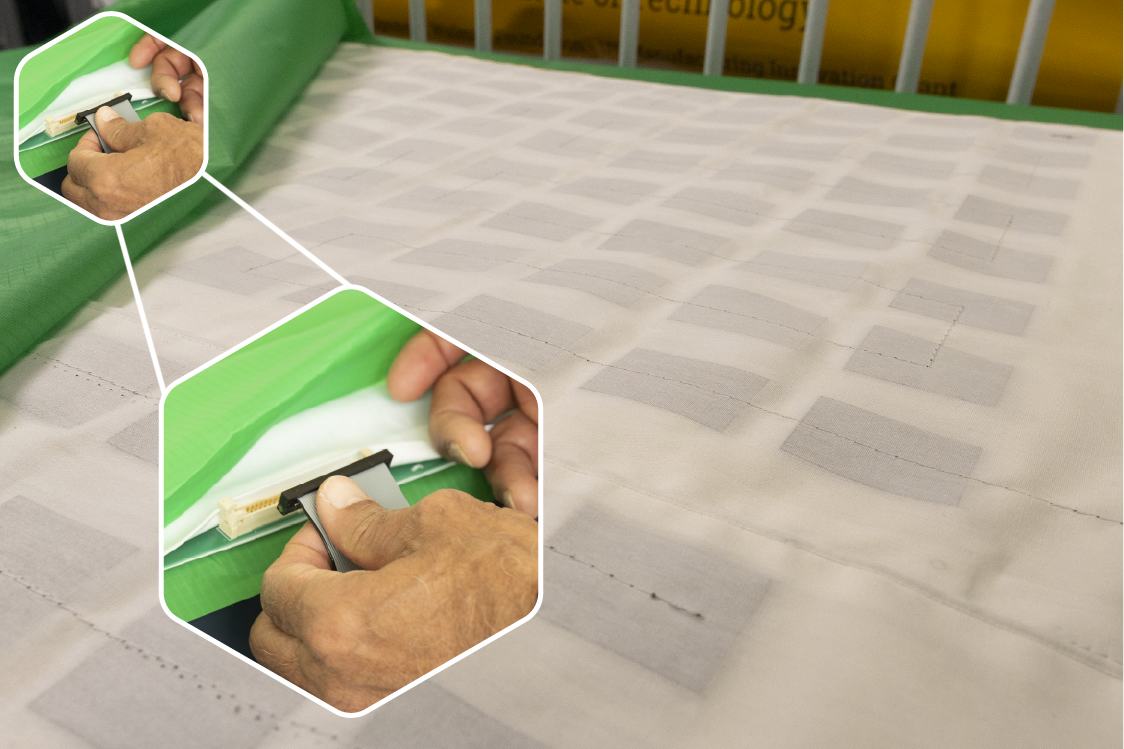 Creating a flexible, washable sensor was a challenge. But making sure it wasn’t intrusive —especially for tiny, medically fragile, premature babies — was even harder.
“We needed to make sure all the sensor data was streaming correctly and integrated into the bed, so the sensors don’t disturb either the physicians’ treatment or the baby's movement,” Park said.
While earlier prototypes had dozens of connecting cables that increased how long it took to deploy the system on the crib, the current device uses just one cable. This simplicity makes the sensor fabric easier for medical staff to implement and feels more natural for the patient and less like a “device” for family members and caregivers.
“The idea that these sensors even exist, let alone be in fabric that isn’t as hard as a board under a patient, is pretty incredible,” Stockwell said.
“In the PICU, we have many kids who are critically ill or injured, sedated, lying in bed with lots of devices on them, and all these things lead to a higher incidence of PI. Even something as minor as a folded sheet or misplaced IV tubing can lead to a pressure injury in a child.” –Jana Stockwell
Machine Learning Medicine
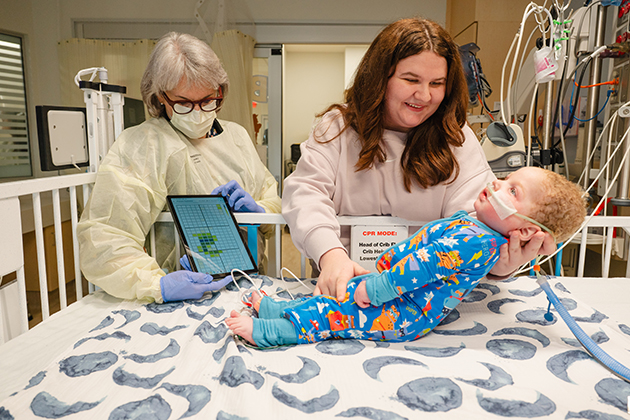 Machine learning is key to the device’s next evolution. Researchers are using predictive analytics to study data patterns and automate care recommendations.
“The beauty of this system is that it adapts to the patient’s weight and condition,” Jayaraman said. “We are monitoring how long the pressure has not changed and how much moisture is there, so we can customize the response to it.”
Healthcare workers will be able to use an app connected to the device that will tell them when to move a patient. In the future, this data will also be automatically integrated into electronic medical records, turning a once laborious manual treatment into something efficient and digitized.
Marketing a Medical Marvel
The researchers are collaborating with Children’s to test and enhance the technology to create the right product. They’re also working with Georgia Tech’s Georgia Manufacturing Extension Partnership to understand the regulatory requirements. Widespread adoption of this sensor fabric could be game-changing for hospitals.
“Penicillin revolutionized how we treat infections, and we want our technology to be similarly revolutionary. Just like penicillin made certain infections obsolete, we hope our sensors can make PIs a preventable relic of the past,” Jayaraman said. “That's why we believe commercialization is very, very critical.”
If successful, this sensor could transform patient care — and actually make pressure injuries a preventable relic of the past.
Feb 23, 2026

The Children’s Pediatric Technology Center at Georgia Tech (PTC) has named a new co-lead for its work in Technology and Devices (Pillar 3)—Jay Shah, MD, DABR. Dr. Shah will co-lead Pillar 3 with Omer Inan, PhD, who has been a co-lead since last summer.
Dr. Shah is an interventional radiologist at Children’s and holds joint appointments as Associate Professor in the Emory University School of Medicine Department of Radiology and Department of Pediatrics. His clinical interests include vascular anomalies and ablative therapies for a variety of conditions. He has a deep understanding of what it takes to translate and implement medical technologies to help improve the lives of children.
Dr. Inan is Regents Entrepreneur and Linda J. and Mark C. Smith Chaired Professor of Electrical and Computer Engineering at Georgia Tech. Over the past 12 years, he has worked with multiple investigators at Children’s on dozens of projects. He is interested in designing clinically relevant medical devices and systems and translating them from the lab to patient care applications. Developing new technologies for monitoring chronic diseases, such as heart failure, at home is a focus of his research.
As we welcome Dr. Shah to this role, we would also like to express gratitude to Steven Goudy, MD, for his work as co-lead of Pillar 3. Dr. Goudy left his role as Division Chief of Otolaryngology at Children’s to pursue an opportunity in Virginia at the end of last year but plans to continue to be involved with PTC initiatives.
We look forward to watching the work of Pillar 3 soar under the leadership of Dr. Shah and Dr. Inan.
Sincerely,
Stanislav Emelianov, PhD
Co-Director, Children’s PTC, Georgia Institute of Technology
Wilbur Lam, MD, PhD
Co-Director Children’s PTC, Children’s Healthcare of Atlanta
Natasha Rishi-Bohra, MPH
Deputy Director, Children’s PTC
Sep 15, 2025

The Children’s Healthcare of Atlanta Pediatric Technology Center at Georgia Tech (PTC) has named a new co-lead for its work in Data Science, Machine Learning, and Artificial Intelligence (Pillar 1)—Lauren Steimle, PhD, MSE. Dr. Steimle will co-lead Pillar 1 with Naveen Muthu, MD, who has been a co-lead since July 2024.
Dr. Steimle is the Harold R. and Mary Anne Nash Early Career Professor and an Assistant Professor in the H. Milton Stewart School of Industrial and Systems Engineering (ISyE) at Georgia Tech. Her research focuses on the application of operations research and machine learning to improve medical decision-making and population health.

Dr. Muthu is a pediatric hospitalist and Director of Research & Innovation Technology at Children's. His research focuses on innovative uses of health information technology to improve safe and effective patient care, such as effectively using risk predictions to improve timely recognition of clinical deterioration in hospitalized children.
Prior to joining Georgia Tech, Dr. Steimle received her PhD in Industrial and Operations Engineering from the University of Michigan and was a postdoctoral fellow at the University of Michigan working with researchers in the School of Public Health.
As we welcome Dr. Steimle to this role, we would also like to express gratitude for the leadership of Gian-Gabriel Garcia, PhD, who recently left Georgia Tech for the University of Washington. Dr. Garcia served as co-lead of Pillar 1 for just over a year and we appreciate his contributions.
We have no doubt that Dr. Steimle and Dr. Muthu will lead our Pillar 1 work to new heights. Please join us in welcoming Dr. Steimle to the team, and in thanking Dr. Muthu for his continued leadership.
Sincerely,
Stanislav Emelianov, PhD
Co-Director of the PTC, Georgia Institute of Technology
Wilbur Lam, MD, PhD
Co-Director of the PTC, Children’s Healthcare of Atlanta
Natasha Rishi-Bohra, MPH
Deputy Director, Pediatric Technology Center
*Virtual Event*
Topic: Intelligent Soft Bioelectronics: Integrating Nanomembrane Sensors with Smart and Connected Healthcare Systems
Conference Highlights:
- Keynote presentation by Kristy Murray, DVM, PhD, Chief Research Officer, Children’s Healthcare of Atlanta; Executive Vice Chair for Research, Emory University School of Medicine
- Selected Oral Abstract Presentations
- Poster Sessions
- Networking/Professional Development Opportunities
Join Georgia Bio and Advocates for Responsible Care August 27th to connect patient advocacy leaders with the life science sector. The Summit features panel discussions with legislative leaders and representatives from across the patient and life science ecosystems. Georgia Bio focuses on collaborating with patient organizations to advance mutual legislative policy and linking patients with companies and researchers who work to discover and develop treatments and cures. Participate in-person or virtually; registration is free but required.
Keynote: Patients & Policy
Robert Popovian, PharmD, Founder, Conquest Advisors; Chief Science Policy Officer, Global Healthy Living Foundation; and Senior Fellow Health Policy, Progressive Policy Institute
Fireside Chat: Access to Care
Special Video Message: Rep. Earl L. “Buddy” Carter (R-GA)
Representative Dr. Jasmine Clark (GA-D | District 108)
Greg Reybold, VP of Public Policy, American Pharmacy Cooperative, Inc.
Patient Roundtable: Impact of Innovation on Patient Lives
Melissa Bishop-Murphy, Senior Director, Government Relations; Founder and Co-chair, Multicultural Health Equity Collective, Pfizer
Lynn Durham, President & CEO, Georgia Core
Leanne West, Chief Engineer, Pediatric Technologies, Georgia Institute of Technology
In-person attendance is encouraged and includes a lunch with advance registration
Click here to register.
The Wearable Innovations for Health Equity workshop, hosted jointly by Georgia Tech’s Institute for People and Technology (IPaT) and Center for Wearable Intelligent Systems and Healthcare (WISH Center), aims to raise awareness and discuss the transformative impact of wearable technologies in promoting wellness and increasing equitable health outcomes. This event will gather impacted community members, researchers, engineers, and practitioners to discuss the use of wearable devices across diverse populations, bridging data gaps for inclusive healthcare, supporting age equity through innovation, empowering minority health, and tailoring wearable technologies to meet gender-specific health needs. The workshop will feature two keynote speakers addressing wearable technological innovations in the morning and health equity challenges in the afternoon.
The Gut Eukaryome: Diversity and Function